We know the walls neurodivergent people hit every day — we hit them too. Each feature is an answer to one of those walls. Try them below, live.
Tap a feature on the left and it actually runs on the right. Run the timer, spin the wheel, kick-start with a maze.

Most timers give you one button: start. An ADHD brain needs help before that button and after it. So a session here has five moves — ignite, focus, breathe, reward, record — and every one of them is adjustable.
Before the work, one round of the arrow puzzle or the brain maze. Thirty seconds of motion beats thirty minutes of staring. Set how many rounds — or skip it entirely.
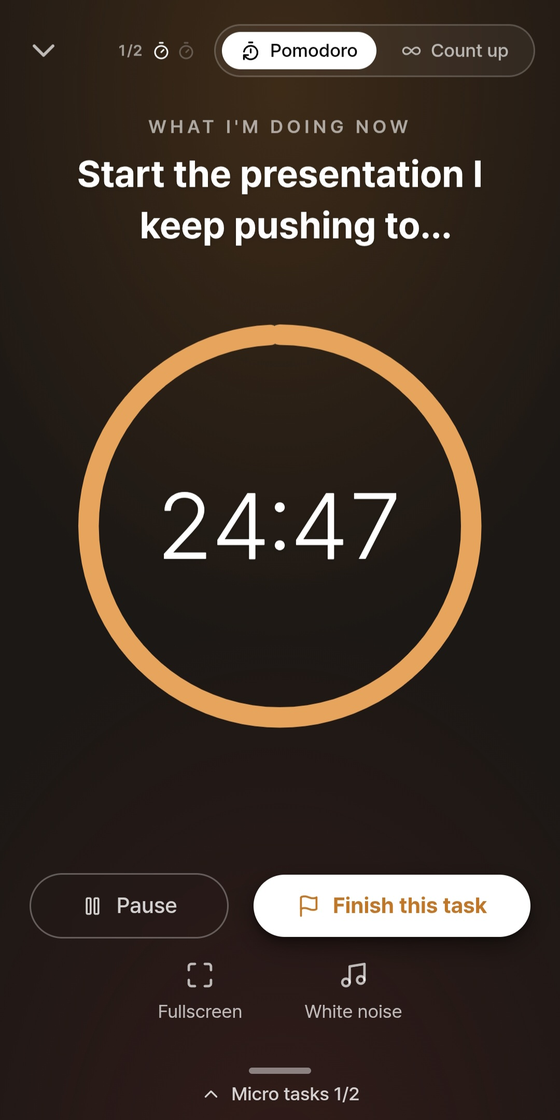
Your estimate is split into pomodoro blocks. Reach for pause and the button dodges — press it four times and it really stops. Big tasks break into micro-steps with their own small timers.
Short breaks come as a game or as stillness, your choice. Water, bathroom, stretch and nap each get their own little timer, so a five-minute break stays five minutes.
Let the timer run out and the task marks itself done — no extra button to remember. The circle fills, and in ND mode a rainbow ring goes off. One more game round, if you want it.
Every session lands in the report, the stats and the graph — alongside water, meals and sleep. On the evening you swear you did nothing, this is the receipt.
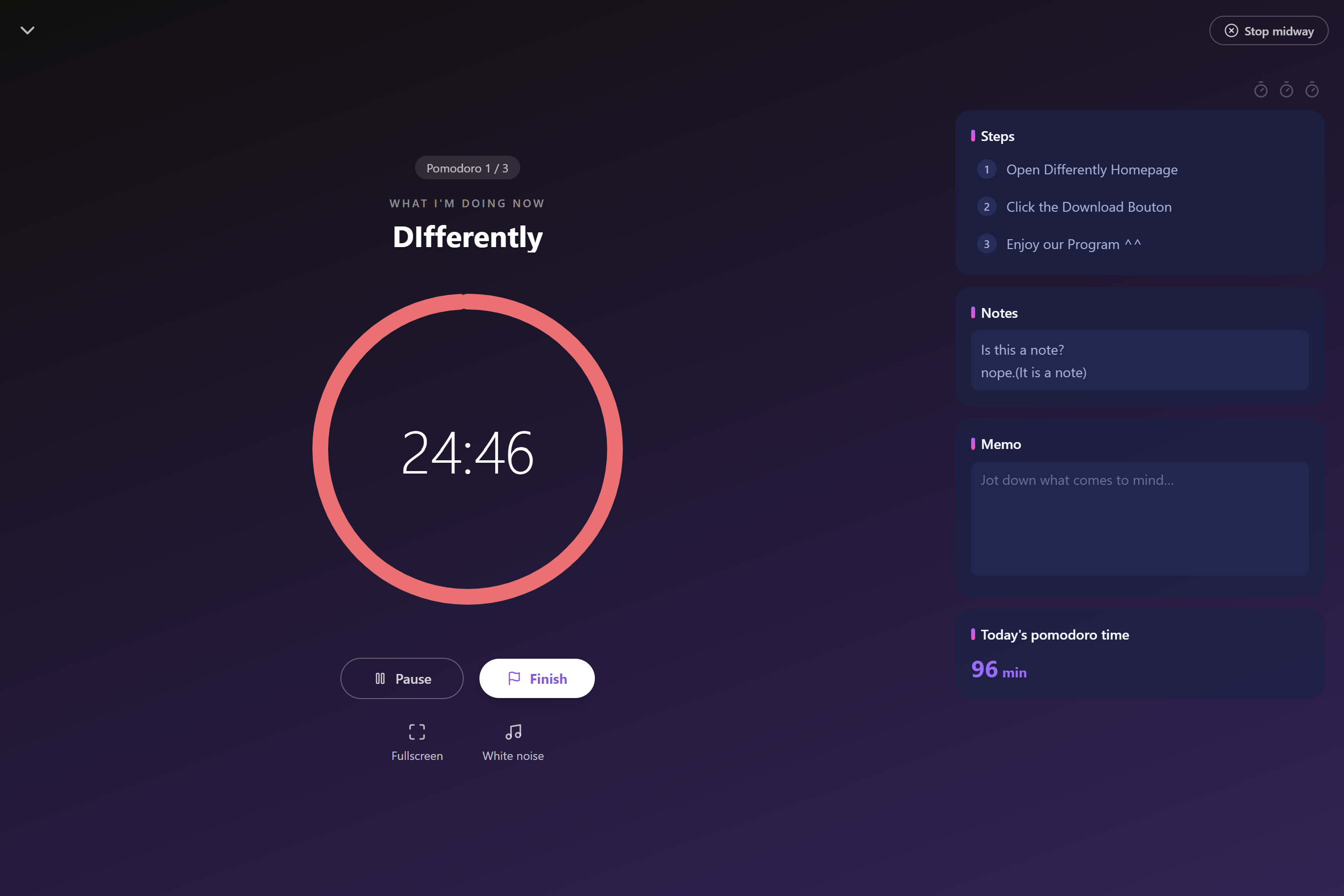
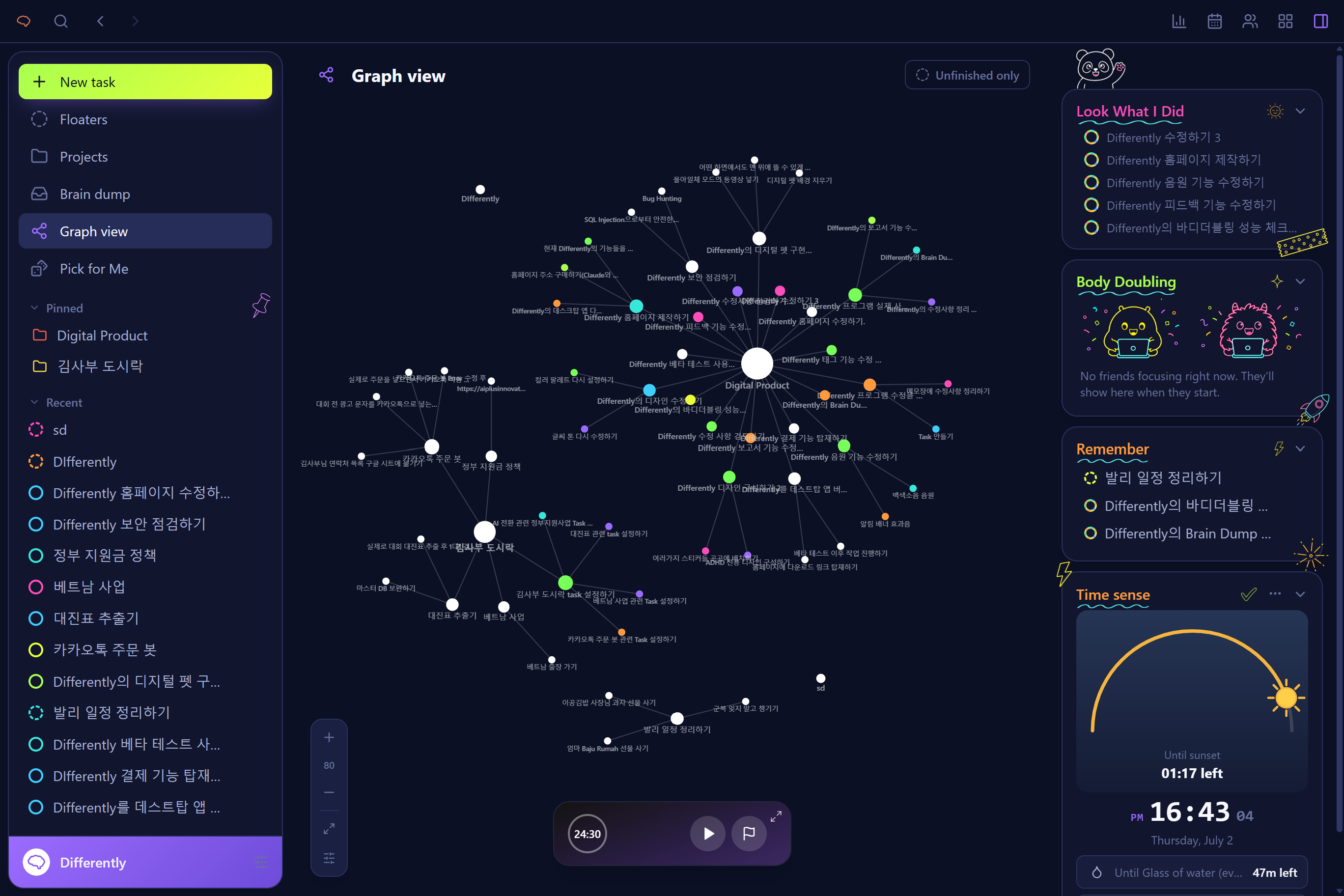
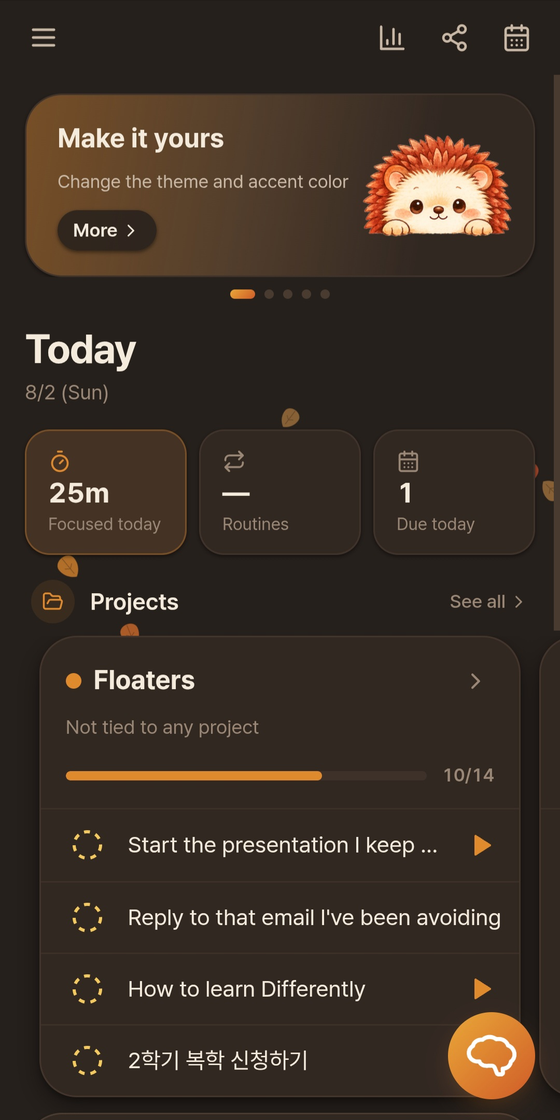
Some brains need calm; some need spark. ND mode is a separate switch that sits on top of light and dark — and it comes in three moods. Pick the one your senses want today; nothing else about the app changes.
Deep midnight blue kept quiet, with the neon saved for the moments that deserve dopamine — finishing something. The original ND mood.
A warm autumn palette with leaves drifting past in the background. Softer than neon when your senses are already full.
Deep green with fireflies and moss spirits. The calmest of the three — for days when you want the screen to stop shouting.
In any ND mood, a finished task earns a rainbow ring — a tiny firework, every time. Pick your own accent colour from seven, choose a font, and if you'd rather have stillness, reduce-motion turns every animation off.
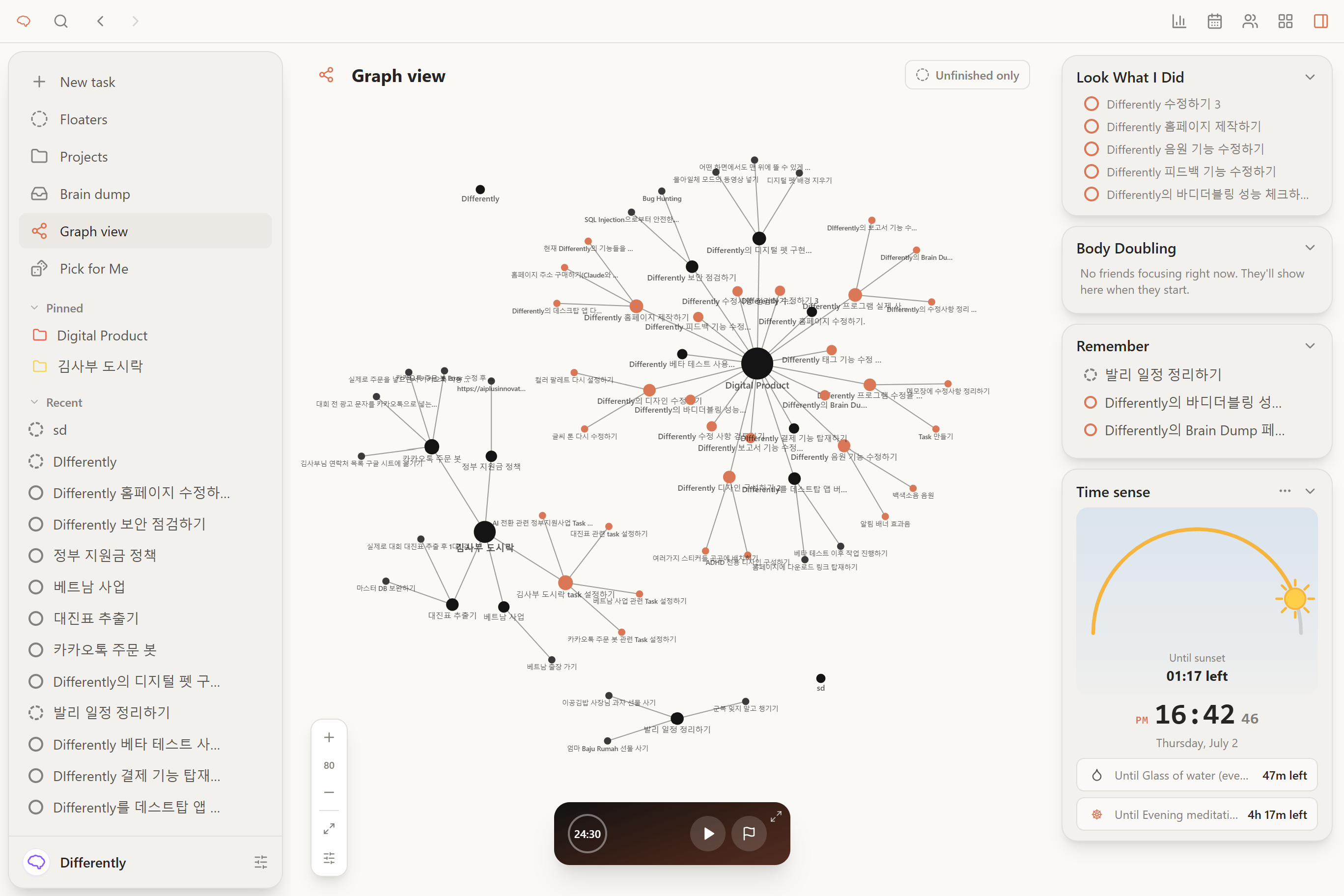
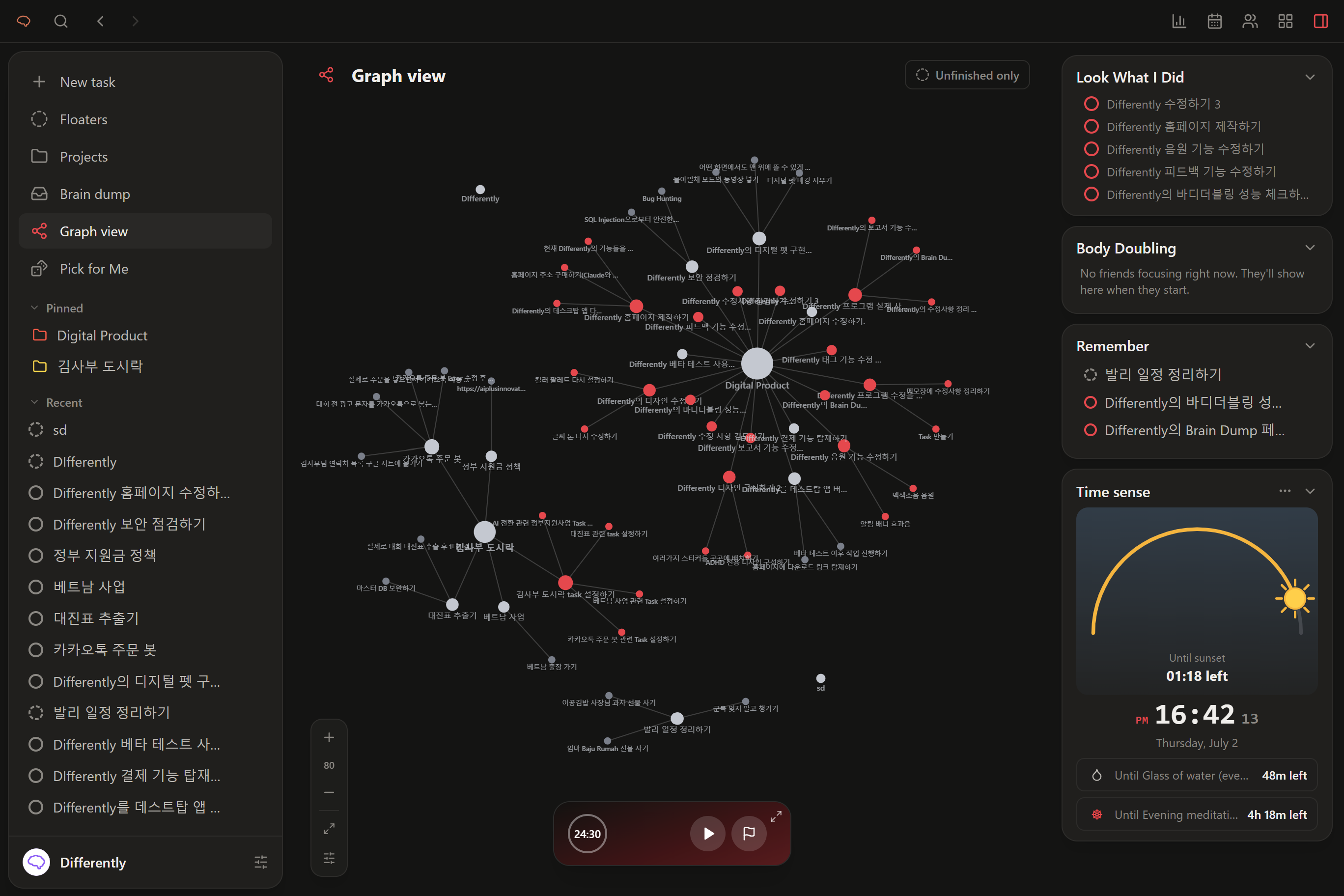
Every task, routine and project floats as a star, connected to what it belongs to. Finish one and it lights up in your personal color. 'What have I even done?' — just look up.
Drag it, zoom it, watch it settle like real physics. The more you finish, the more your universe glows in your color — progress you can feel, not just count.
BrainDump is a plain notebook: notes on the left, an editor on the right, and nothing that asks to be tidied. Writing it down is the whole job — deciding can wait for a braver day.
When a scribble turns out to matter, one tap makes it a task — and a whole notebook can become a project. The original note stays exactly where it was.
Flip the same dump into an infinite canvas — spread thoughts out, connect them, zoom out until they make a shape. One toggle away, on desktop.
A daily kit, a mood diary, animal friends, food, faith packs and more. Stick them right on your notes — they keep their spot on every screen size.
On the phone it's the same notebook, one screen at a time — plus a capture sheet that takes notes, tasks and routines back to back without closing. The thought gets caught before it evaporates.
One screen at a time, reachable with one thumb. Same account and same data as the desktop, in sync both ways.
Meals, water, deadlines and routine reminders come through as real phone notifications — not just a banner you'd only see if you happened to be looking.
A sun-and-moon clock with the day laid out on it: how long until the next meal, the next glass of water, sunset, prayer. Time you can glance at instead of calculate.
One sheet takes notes, tasks and routines one after another without closing. The thought that would have evaporated between the bus stop and your door gets caught.
It's not that you don't want to — the 'start' switch won't flip. When your head is full and frozen, we break the start into small pieces.
Four quadrants that answer 'what first?' before you can spiral. Sort once, then just do the top-left box. Memos welcome too.
Dedicated pageA notebook to empty your head into — no formatting, no pressure to organize. Later, one tap turns a note into a task or a whole notebook into a project.
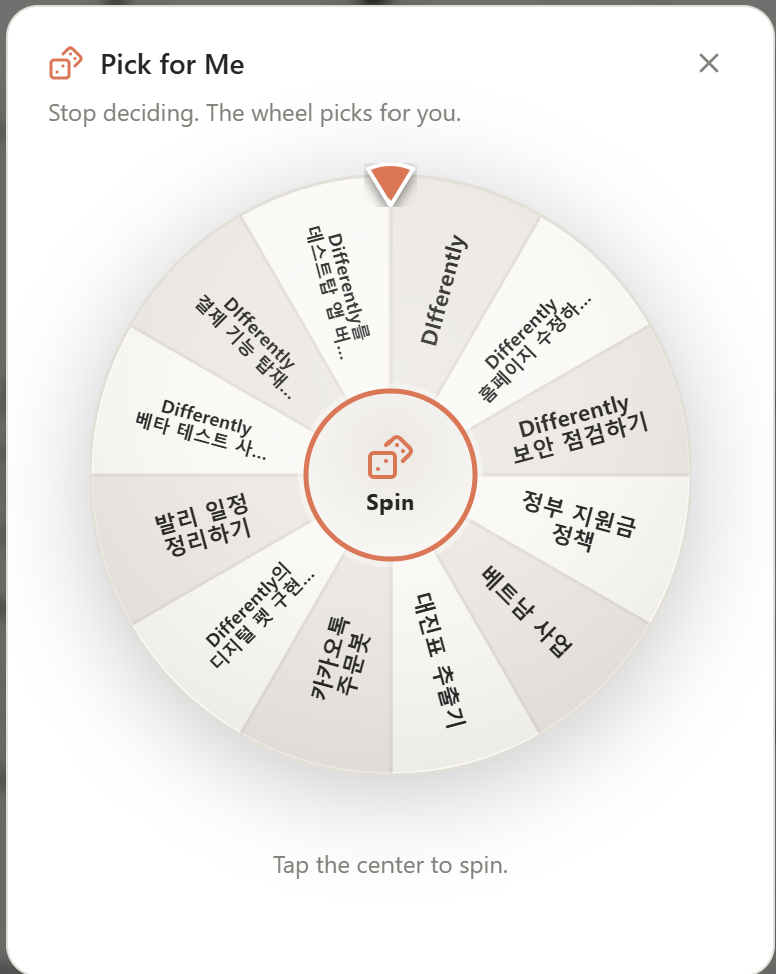
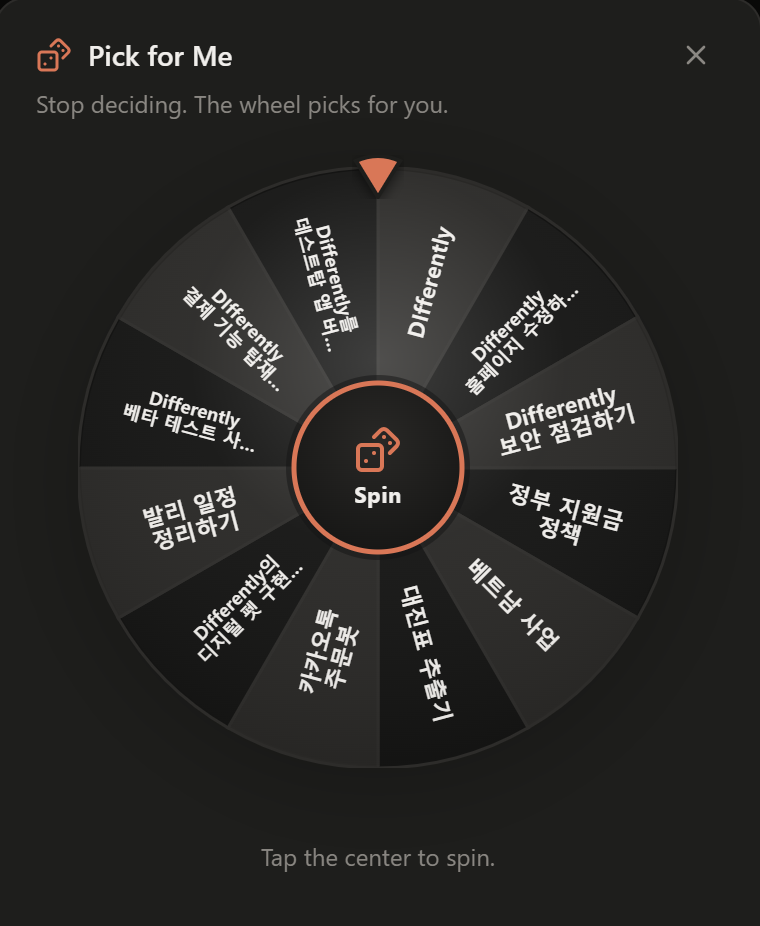
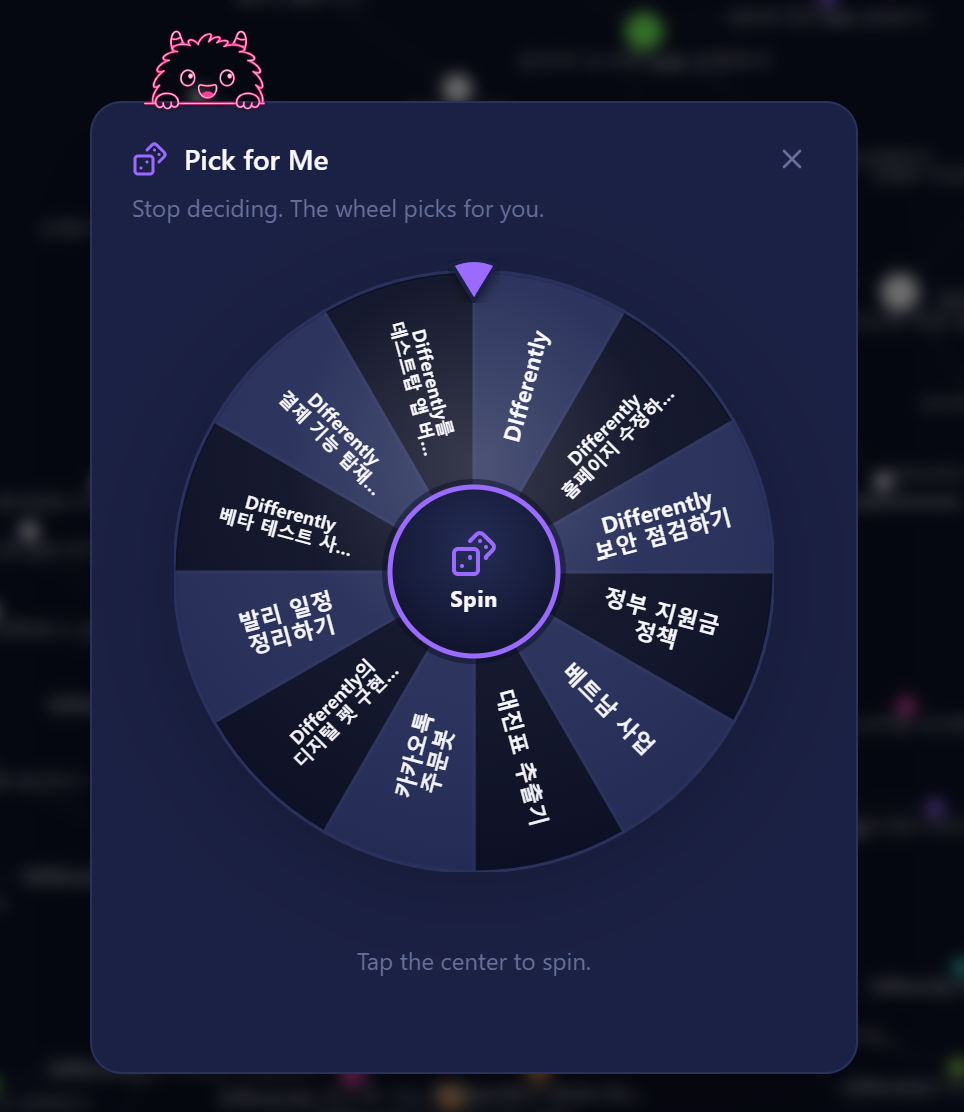
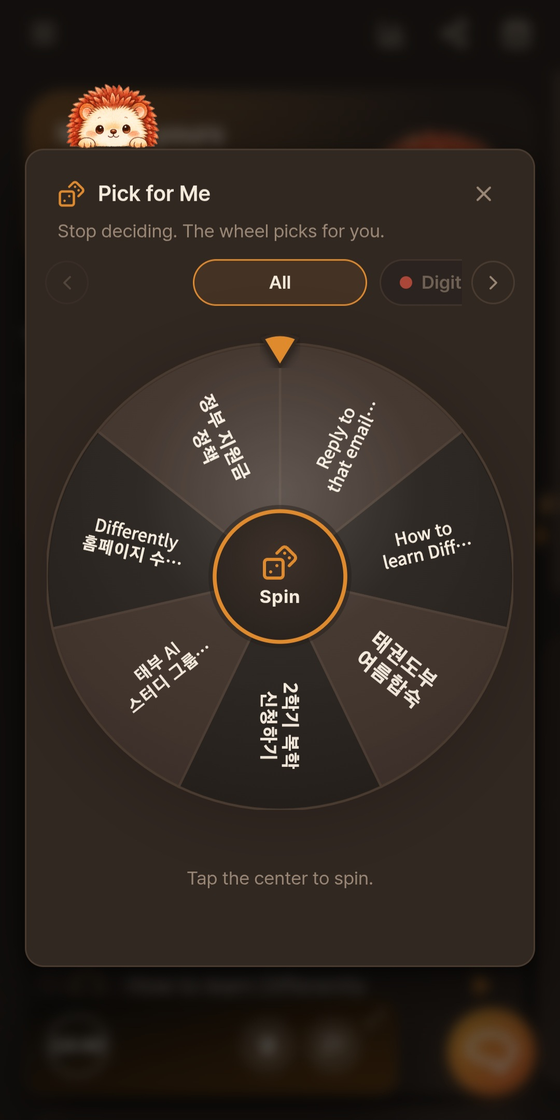
When too many options freeze you, the wheel picks one. Save the deciding energy for the doing.
An arrow puzzle or a brain maze — half a minute of motion to get the wheels turning. Once you're moving, the task follows. Choose which game, and how many rounds.
A task too big to start becomes three or four steps, each with its own small timer. You only ever have to begin the next one.
The brain files time as 'now' or 'not now', so hours melt without a trace. We make time something you can see.
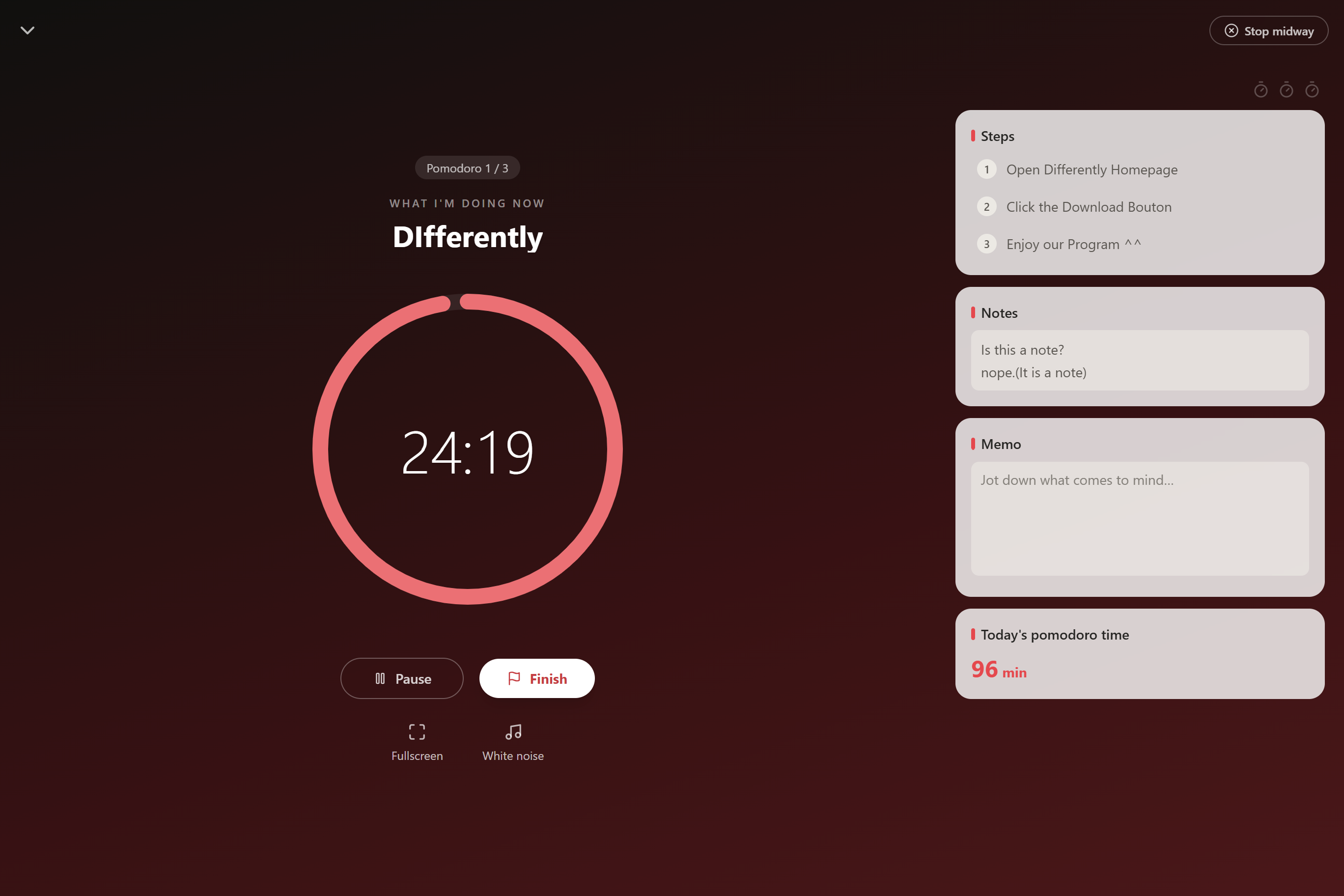
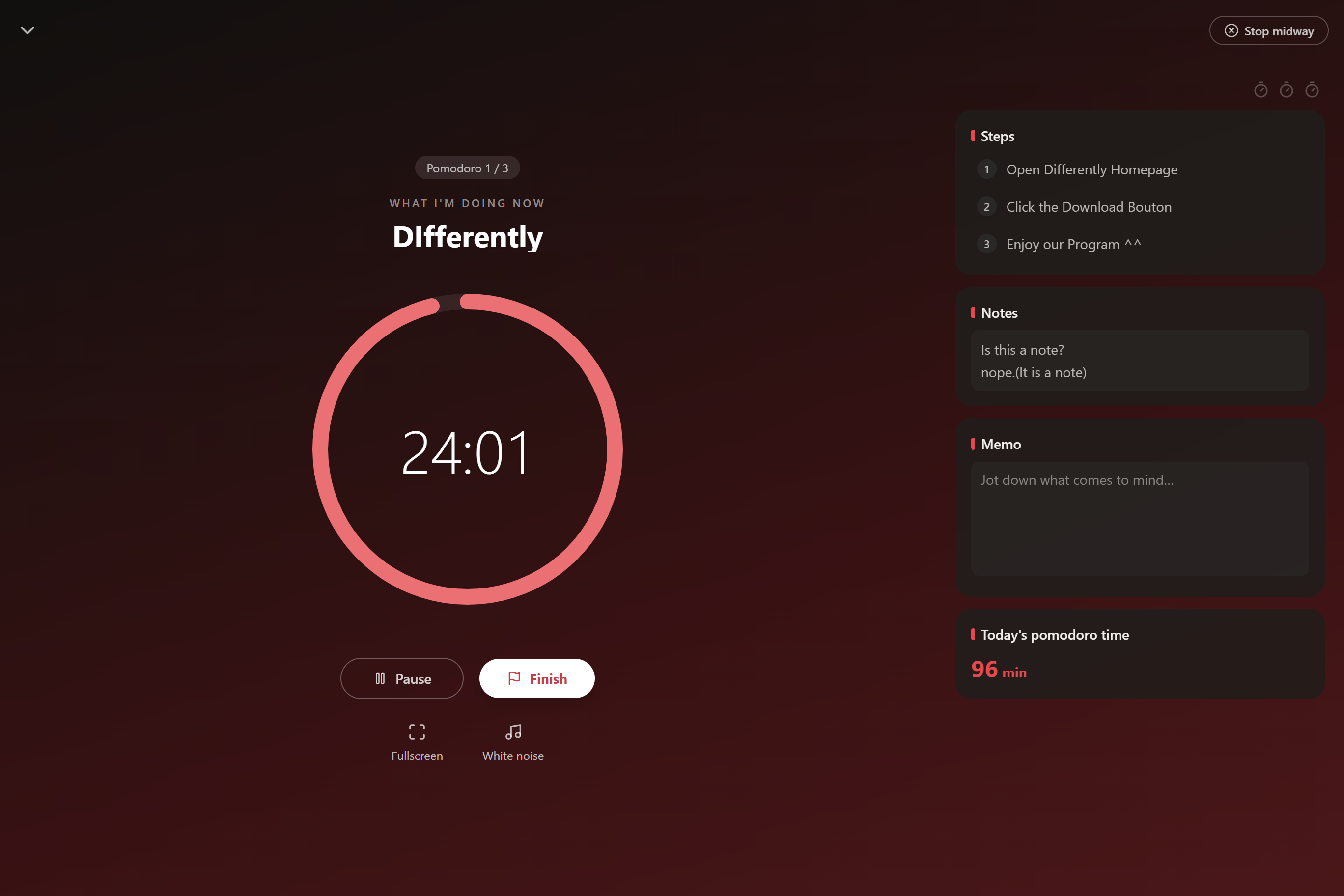
One task on screen, a ring that visibly shrinks, and a pause button that dodges your cursor when you reach for excuses. Go past your estimate and it quietly celebrates instead of scolding.
A scary task becomes dots — one small pomodoro per step. You never face the whole mountain, just the next stone.
A sun-and-moon clock showing sunrise, sunset and how long until your next meal, glass of water, snack or prayer. Instead of asking what time it is, you see where you are in the day.
Eight kinds of jazz, a ticking clock, a countdown, or silence — floating past as slow bubbles you pop to play. Sound gives time a shape, and gives a restless brain something harmless to hold on to.
Out of sight is out of mind. We keep the important things visible — and make what you've done stay visible too.
Two boxes. 'Now' holds only what's truly for now, so a long list can't freeze you. Everything else waits safely in 'Later'.
Pin what you can't afford to forget and it stays on screen. A notification that disappears might as well never have existed.
Finished work piles up as glowing stars and honest charts. 'I did nothing' is the biggest lie — here's the data that refutes it.
Due dates announce themselves ahead of time, and routine reminders arrive on your schedule. On your phone they come through even with the app closed. Forgetting isn't laziness — it's wiring. So we built around it.
Daily, weekly and monthly routines that run as their own sessions, and one calendar holding tasks, projects and deadlines together. What repeats stops needing to be remembered.
Strangely, you focus when someone is near. We brought that 'together' feeling into the screen — it's called body doubling.
Send a friend request with a code, get accepted, and share just this: focusing, on a break, or around — with today's focus time side by side. No screens, no task names. Just the steady presence that keeps you going.
Turn on the timer and a little buddy appears in a corner of the desktop app, staying on top of your other windows and quietly working with you. Even alone, you're not quite alone.